 Thaipusam
Thaipusam
India is a land of vibrant cultures, ancient traditions, and deeply rooted religious beliefs, expressed vividly through its numerous festivals. Each festival reflects the spiritual philosophy, social values, and cultural diversity of the people who celebrate it. Among the many festivals observed by the Indian community, Thaipusam holds a special place due to its intense spiritual significance, dramatic rituals, and profound demonstration of faith, devotion, and sacrifice. Celebrated primarily by Tamil Hindus, Thaipusam is dedicated to Lord Murugan, the Hindu god of war, courage, wisdom, and victory over evil. The festival is not merely a religious occasion but a powerful expression of spiritual discipline, penance, gratitude, and communal unity.
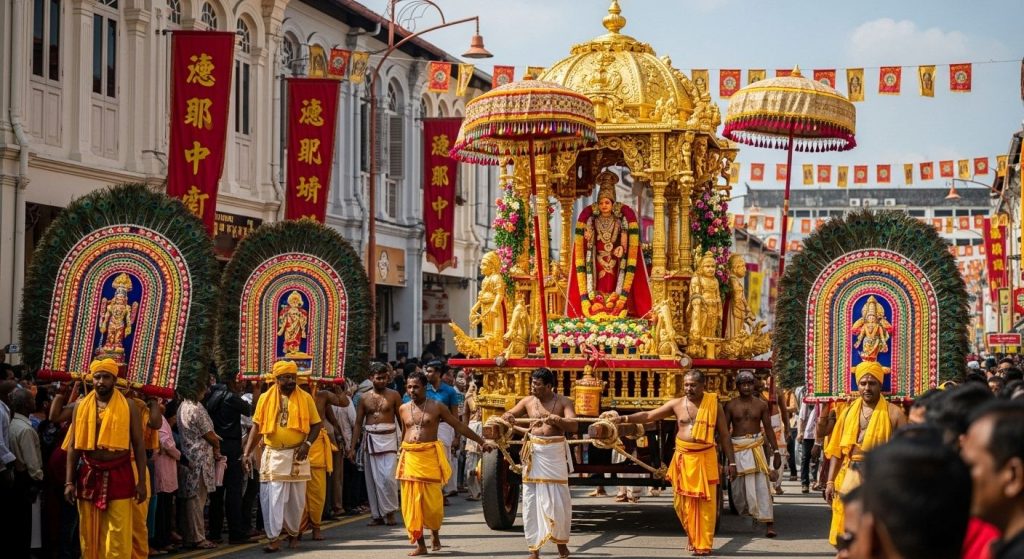
Thaipusam is traditionally observed during the Tamil month of Thai, which falls between January and February according to the Gregorian calendar. The festival coincides with the full moon (Pusam star), from which it derives its name—Thai referring to the month and Pusam referring to the star. While Thaipusam originated in India, particularly in the southern state of Tamil Nadu, it is also widely celebrated in countries with significant Tamil populations such as Malaysia, Sri Lanka, Singapore, Mauritius, and South Africa. Among these, the Thaipusam celebrations in Malaysia are especially renowned for their scale and intensity, attracting millions of devotees and tourists each year.
At its core, Thaipusam commemorates a divine event in Hindu mythology: the day when Goddess Parvati presented her son Lord Murugan with a divine spear known as the Vel. This sacred weapon enabled Murugan to defeat the demon Soorapadman, who symbolized arrogance, ignorance, and evil forces that disturb cosmic balance. The victory of Murugan represents the triumph of good over evil, wisdom over ignorance, and self-discipline over uncontrolled desire. Devotees celebrate this victory by offering prayers, performing rituals, and undertaking acts of penance to purify the mind, body, and soul.
One of the most striking features of Thaipusam is the intense physical and spiritual practices undertaken by devotees. Many participants prepare for the festival through fasting, prayer, meditation, abstinence, and strict moral discipline, sometimes for several weeks before the actual day. This period of preparation is believed to cleanse the body and mind, making the devotee worthy of offering worship to Lord Murugan. The emphasis on self-control and purity highlights the deeper philosophical meaning of Thaipusam—that spiritual elevation requires sacrifice, commitment, and inner transformation.
Among the various rituals performed during Thaipusam, the most iconic is the carrying of the Kavadi, a ceremonial burden offered to Lord Murugan as an act of devotion. The Kavadi can range from a simple wooden arch decorated with flowers and peacock feathers to elaborate structures attached to the body with hooks and piercings. Some devotees pierce their skin, cheeks, tongues, or backs with small spears and hooks, believing that their faith in Lord Murugan will protect them from pain and injury. While these acts may appear extreme to outsiders, devotees consider them sacred vows (vratams) that symbolize surrender to the divine and detachment from worldly suffering.
The physical acts performed during Thaipusam are deeply symbolic rather than merely sensational. For instance, piercing the tongue represents control over speech and the silencing of ego, while carrying heavy Kavadis signifies the burden of karma and the devotee’s willingness to endure hardship for spiritual growth. The state of trance that many devotees enter during these rituals is believed to be a result of divine grace, allowing them to transcend physical pain and connect with a higher spiritual consciousness. This aspect of Thaipusam underscores the Hindu belief that the human body is a temporary vessel and that true liberation comes through spiritual discipline and devotion.
Another important element of Thaipusam is the procession to Murugan temples, often located on hilltops or caves, such as the famous Batu Caves in Malaysia or Palani Murugan Temple in Tamil Nadu. Devotees walk barefoot for long distances, chanting hymns, beating drums, and singing devotional songs in praise of Lord Murugan. The journey itself is considered a sacred pilgrimage, symbolizing the soul’s journey toward enlightenment. Family members, friends, and volunteers provide support along the way by offering water, milk, fruits, and encouragement, reinforcing the strong sense of community that defines the festival.
Milk plays a significant role in Thaipusam rituals, as many devotees carry pots of milk (paal kudam) on their heads as offerings to Lord Murugan. Milk symbolizes purity, nourishment, and divine grace, and offering it signifies the devotee’s desire to be spiritually cleansed and blessed. Unlike the more intense Kavadi rituals, carrying milk pots is a common form of worship that allows people of all ages, including women and children, to participate meaningfully in the festival.
Thaipusam is not solely about individual devotion; it is also a powerful communal event that brings together people across social, economic, and generational boundaries. During the festival, temples become centers of collective worship, cultural expression, and social service. Volunteers distribute free food (annadhanam), medical assistance is provided to devotees, and musicians, dancers, and priests contribute to the vibrant spiritual atmosphere. This sense of unity reflects one of the core values of Hindu philosophy—that spiritual growth is enhanced through service to others and shared devotion.
Despite its ancient origins, Thaipusam remains highly relevant in the modern world. For many devotees, the festival serves as an opportunity to seek forgiveness, fulfill vows, express gratitude, or ask for blessings related to health, education, family, or career. In an era characterized by stress, materialism, and fast-paced living, Thaipusam offers a moment of reflection, reminding individuals of the importance of discipline, humility, and faith. The festival encourages people to look beyond physical comfort and material success, focusing instead on inner strength and spiritual fulfillment.
Thaipusam has also attracted global attention due to its dramatic visuals and unique rituals. Tourists, researchers, and photographers from around the world attend the festival to witness its intensity and cultural richness. While this exposure has helped promote awareness and appreciation of Tamil culture, it has also raised discussions about religious sensitivity and respectful observation. For devotees, Thaipusam is not a spectacle but a deeply personal and sacred experience, deserving of understanding and reverence.
In conclusion, Thaipusam is far more than a religious festival—it is a profound spiritual journey that embodies the essence of Hindu devotion, sacrifice, and self-realization. Rooted in ancient mythology yet alive in contemporary practice, Thaipusam illustrates the enduring power of faith to inspire courage, discipline, and unity. Through its rituals, symbolism, and communal spirit, the festival continues to guide devotees toward moral strength and spiritual awakening. As one of the most intense and meaningful celebrations in Indian culture, Thaipusam stands as a testament to humanity’s timeless quest for divine connection and inner transformation.
Leave a Reply