 Thaipusam
Vibuthi Abhichegam for thaipusam 2026
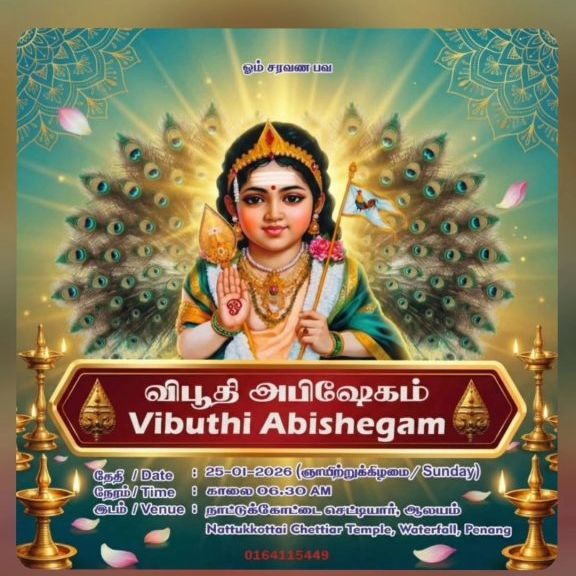
Date: 25 January 2026
Time: 6.30am
Location: Penang Nattukkottai Chettiar Temple (PNTT), Waterfall Road, Pulau Pinang, Malaysia
Vibuthi Abishegam at the Temple for Thaipusam is one of the most powerful and spiritually intense festivals celebrated by Tamil Hindus around the world. It is dedicated to Lord Murugan, the divine warrior and son of Lord Shiva and Goddess Parvati. Thaipusam usually falls in the Tamil month of Thai, on the day when the star Poosam is at its peak. On this sacred day, devotees gather at temples with deep devotion, seeking blessings, forgiveness, strength, and spiritual upliftment. Among the many rituals performed during Thaipusam, Vibuthi Abishegam holds a special place because of its purity, symbolism, and connection to divine grace.
Vibuthi, also known as sacred ash, is not an ordinary substance. It is considered holy because it represents spiritual wisdom, purity, and the truth that everything in this world is temporary. Vibuthi is traditionally prepared from the ash of sacred offerings, such as dried cow dung, herbs, and other pure materials used in homam (fire rituals). The ash that remains after the sacred fire is believed to carry divine energy. When devotees apply vibuthi on their forehead, it is not just a mark—it is a reminder to control ego, remain humble, and stay devoted to God.
Abishegam means sacred bathing of the deity. It is one of the most important forms of worship in Hindu temples, especially for Lord Murugan during Thaipusam. In an abishegam, the deity is bathed with different holy substances such as milk, curd, honey, sandalwood paste, tender coconut water, rose water, and vibuthi. Each substance has its own meaning and spiritual purpose. Among them, vibuthi abishegam is considered very special because vibuthi symbolizes Lord Shiva’s grace, and Lord Murugan is deeply connected to Shiva as his son.
On Thaipusam morning, the temple atmosphere becomes vibrant and divine. The air is filled with the sound of bells, chanting of “Om Saravana Bhava” and “Vel Vel Muruga”, and the rhythmic beat of traditional drums. Devotees arrive early, many of them fasting or maintaining strict spiritual discipline for days or even weeks before the festival. They wear clean traditional clothes, carry offerings, and enter the temple with folded hands and devotion in their hearts. The temple priests prepare for abishegam by arranging sacred items, cleaning the sanctum, and ensuring that everything is pure and ready for worship.
When vibuthi abishegam begins, it is truly a divine sight. The deity of Lord Murugan is first decorated simply, and then the bathing rituals begin. The priest chants Vedic mantras and Murugan slokas, calling upon the Lord’s presence and blessings. Vibuthi is mixed with holy water or prepared in a paste form and then gently applied or poured over the deity. The white ash covering the idol represents divine protection and the power of spiritual knowledge. For devotees watching, it is not just a ritual—it becomes a moment of deep emotion and surrender.
One of the most beautiful meanings of vibuthi abishegam is that it reminds devotees that life is not permanent. Just as everything turns into ash eventually, human pride, anger, greed, and attachment must also be reduced to ash. Vibuthi teaches that the soul is eternal, but the body and worldly desires are temporary. During Thaipusam, when devotees perform sacrifices like carrying kavadi, walking long distances barefoot, or offering intense prayers, vibuthi abishegam becomes a symbol of their spiritual transformation. It shows that the devotee is willing to burn away negativity and become pure in the eyes of God.
Many devotees believe vibuthi has healing power and protective energy. After the abishegam, the priest distributes vibuthi as prasadam (blessed offering). Devotees receive it with great respect, applying it on their forehead, throat, or chest. Some take it home to apply daily, believing it will protect them from illness, negative energies, and evil influences. But beyond physical benefits, vibuthi is mainly valued for its spiritual effect. It gives devotees inner peace, courage, and faith, especially during difficult times.
During Thaipusam, vibuthi abishegam also has a strong connection with Lord Murugan’s role as the remover of obstacles and giver of wisdom. Lord Murugan is known as the God of victory, courage, and divine knowledge. He is worshipped by those seeking success, clarity, protection, and strength. Vibuthi represents wisdom and detachment, and when it is offered to Murugan, it is like offering one’s ego and pride to the Lord. Devotees pray that Murugan will guide them away from ignorance and toward the path of truth.
The ritual also creates unity among devotees. People from different backgrounds, ages, and life situations stand together in the temple, all focused on one thing—devotion. Some devotees may be praying for family happiness, others for health, career success, marriage, or peace of mind. Some may come with tears in their eyes, carrying personal burdens. When they witness vibuthi abishegam, many feel a sense of relief, as if their pain is being washed away by divine grace. It becomes a powerful reminder that God listens, and that devotion never goes unanswered.
In many temples, vibuthi abishegam is performed multiple times during Thaipusam day. Each time, the deity is beautifully decorated after the bathing ritual, often with flowers, sandal paste, and ornaments. The final alankaram (decoration) after vibuthi abishegam is usually stunning. The white vibuthi contrasts beautifully with the bright flowers and the divine face of Lord Murugan. Devotees believe that seeing the Lord in this form gives immense blessings and removes karma from past actions.
Another deep spiritual meaning is that vibuthi abishegam represents the balance between devotion and discipline. Thaipusam is not only about celebration but also about spiritual practice. Fasting, prayer, and self-control are important parts of the festival. Vibuthi reminds devotees to remain calm, humble, and focused even when life is challenging. It teaches that devotion must come with purity of mind and action. Just as vibuthi is pure and clean, the devotee’s heart should also become pure.
For those who carry kavadi during Thaipusam, vibuthi abishegam is especially emotional. Many kavadi bearers consider vibuthi sacred and apply it on their body before beginning their journey. They believe it strengthens their faith and protects them throughout the difficult walk. After completing their vows, receiving vibuthi prasadam at the temple feels like a divine reward. It marks the completion of their sacrifice and the acceptance of their prayers by Lord Murugan.
In conclusion, vibuthi abishegam at the temple during Thaipusam is not just a ritual of bathing the deity with sacred ash. It is a powerful spiritual experience that carries deep meaning for every devotee. Vibuthi symbolizes purity, wisdom, humility, and the temporary nature of worldly life. Abishegam symbolizes surrender, devotion, and the washing away of negativity. Together, vibuthi abishegam becomes a divine reminder that true strength comes not from the body, but from faith and spiritual clarity. On Thaipusam, when Lord Murugan is worshipped with such intense devotion, vibuthi abishegam becomes a sacred moment where the devotee feels closer to God, more peaceful within, and spiritually renewed. It is a ritual that touches the heart, uplifts the soul, and strengthens the path of devotion for everyone who witnesses it.
Leave a Reply